Immersive Talk with Josh Frigo
Can you tell our audience a little about yourself?
I’m Josh Frigo and I’m a producer and mixer in Nashville, TN. I’ve been making recordings for fun since I was a kid, initially on a hard disk Tascam recorder, then GarageBand, and now in modern DAWs. I didn’t know what I was doing was called “producing” or “mixing” when I started, I just loved recording mine and my friend’s music and became obsessed why what I recorded didn’t sound like the records I grew up listening to.
I spent years as an artist in a band, and as a for-hire touring utility player in Nashville, and throughout that time I never stopped making records for myself and other people–then around 2019 I had developed enough relationships to leave touring and move full-time into production and mixing.
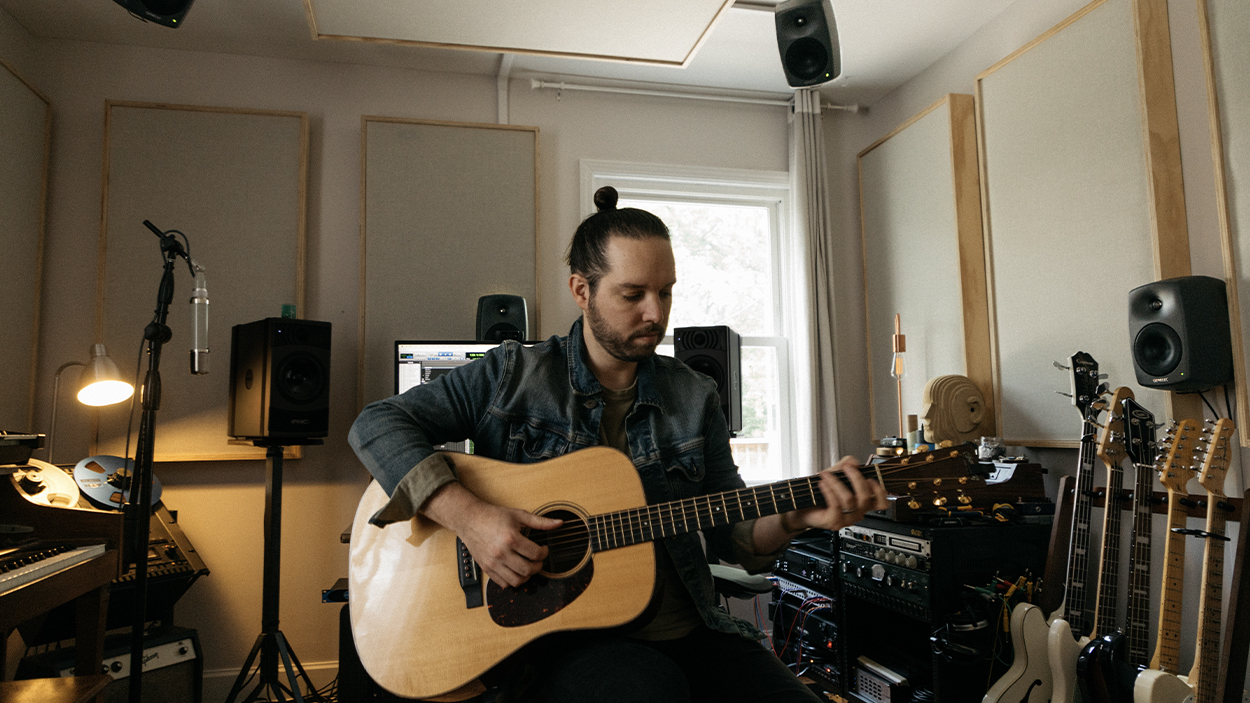
Can you tell us about your studio space?
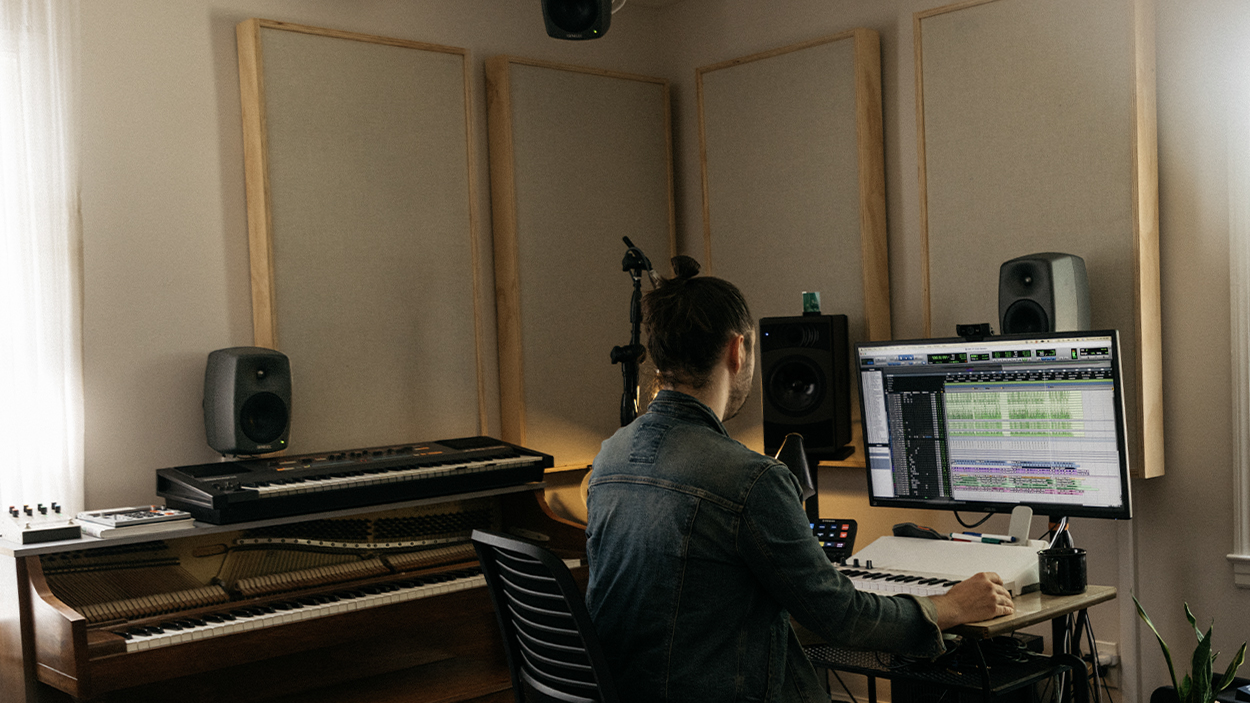
I currently work out of a converted bedroom studio in our home in East Nashville while we build a dedicated studio on our property. It’s small and square, basically the worst possible dimensions for recording or critical listening. When I left my previous rental studio to come here, I was really concerned that work would suffer moving into a space like this. But I’ve worked hard to treat the room, learn its shortcomings, and be creative with its limitations. Despite the change, I think my work has only improved since being here. I hope that’s encouraging to anyone working from a bedroom studio–you can still make great records in an imperfect environment.
Can you give an overview of the key equipment you use in the studio?
I’ve worked in Pro Tools for over a decade now and I can’t imagine leaving. Most basic tracks run through my modded Yamaha 1602 console, except for lead vocals which mostly go through a Wunder Audio PEQ2R and into a Distressor. I bought an Upton 251 a few years back and that has continued to deliver amazing sounding vocals across a range of different singers. I also lean on my Coles, vintage Sony SDCs, and 414’s for instrument mics. I occasionally will mix to tape on my Otari MX5050 when project timeline and budget allow for it.
I use every instrument in my studio frequently. If something’s not clicking for me, I’ll swap it for something else. I love my Martin D18, Gibson J50, and Taylor 410 acoustics, my reissue 58 tele and American Strat, plus a Baldwin upright piano I bought used in great condition and Juno 106s. I love my Chase Bliss and Hologram Electronics guitar pedals and treat them more as outboard gear than strictly as my guitar setup. I’ll often run tracks out of Pro Tools into those and attempt to get a performance on creative FX.
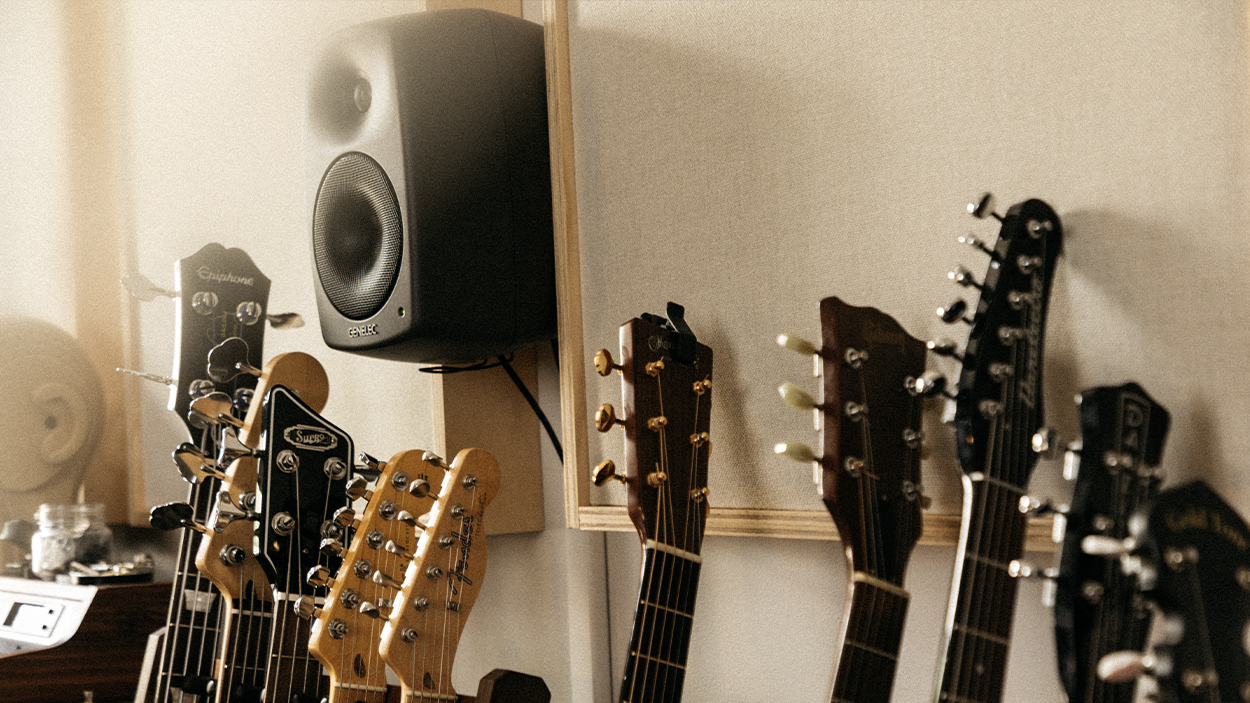
What type of work do you do in your studio?
I write, record, and mix stereo and spatial in this room. Working as a producer has been a great fit for me cause I love each of those processes and get to have a hand in all of them, and often on Indie projects I’m taking lead on several of those production phases.
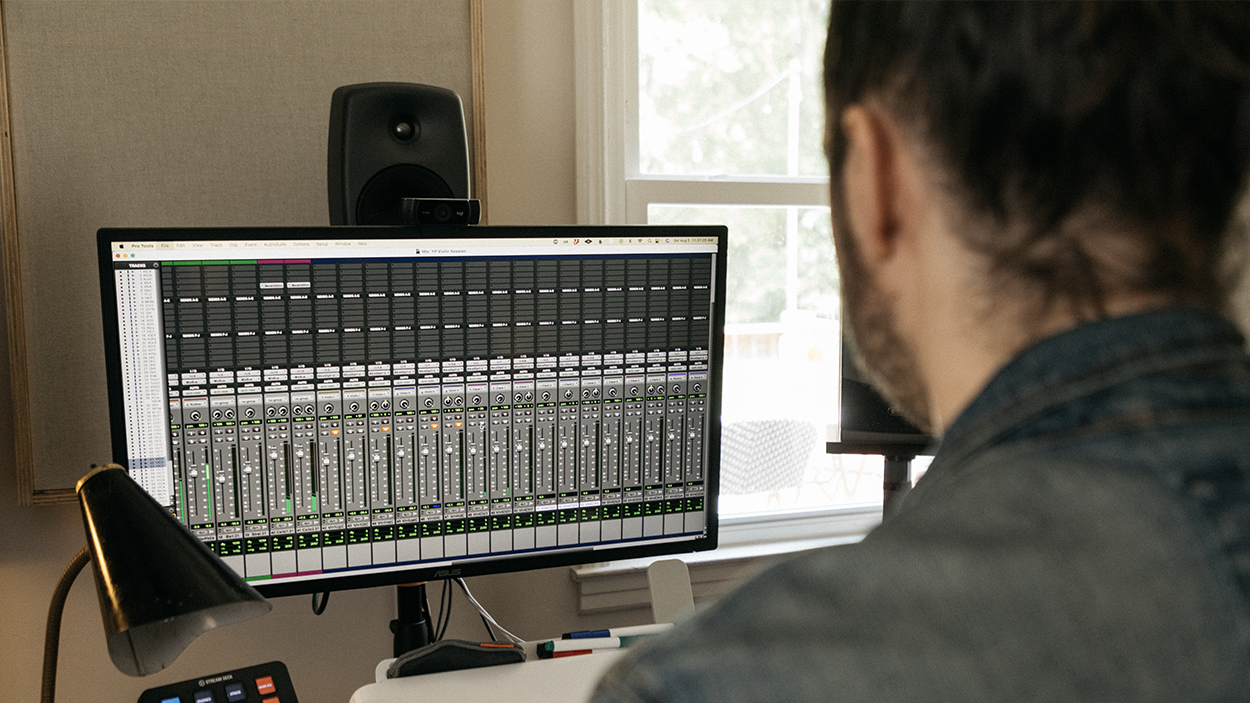
Is there a particular Immersive format you specialize in?
For now, I strictly mix Dolby Atmos with my business partner Alex Dobbert at Movement Mixing but if we see a demand for other formats, we’d be happy to accommodate.
How and when did you become interested in immersive audio, and what made you finally upgrade your studio?
Alex was working for UMG in the early days of Atmos and got onboarded pretty quickly as folks started experimenting with it there. He and I had worked together for years, and he came to me and said, “This is really fun, we should make a company and do this.”
What made you finally equip your studio for immersive, and can you describe how you did the upgrade? If you worked with any external people or had work done on the studio, can you provide some details?
I knew from the beginning that I would need to setup an immersive rig for my room if I was going to do this right. I had experimented with the binaural render and felt like if I was going to be proficient in the format I’d need the whole picture that an immersive speaker system provides. As soon as I was able to get the funds together, I dove in.
I couldn’t install an immersive rig at my last rental studio so I decided to make the move home to accommodate it. I was fortunate enough to speak to several friends in the industry about what I needed and Mike Picotte at Sweetwater, who’s done a ton of rooms at this point. They definitely pointed me in the right direction.
Now that you are working in immersive, how does it differ from stereo?
I think the fundamental goals are the same across formats. We want the sound coming out of someone’s speakers or headphones to move them. We’re looking for clarity, impact, and emotion in our mixes. It’s the tools and techniques we use to accomplish it that are different.
It’s exciting to be able to fill up a room with sound. I’m particular about wanting the system to feel like it’s working as a single unit. If I’m walking around my room and feel like I’m focusing on a single sound source or getting distracted by a lone part, to me that’s a sign that the mix isn’t finished yet. Just like in stereo, I don’t want to be listening to my speakers or compression or processing, I want to be listening to the song.
Can you describe your Genelec monitoring system (format, models etc)? Can you tell us why you chose Genelec, and how the monitoring system helps you to work in immersive?
I work on a 7.1.4 system with Genelec 8030c’s for everything except my main Left+Right position, and I have two 7040A’s for my LFE.
There are very few things in the studio world that I get really particular about, but monitors are one of them. Most of the time I’m happy to use just about any preamp or compressor etc, but I have to be able to trust my monitors or else all my other decisions are compromised. Genelecs were an obvious choice for me. I demoed a wide range of options but the 8030c’s were the pretty much the only speaker at my price point that told my ears what they needed to hear.
Can you list some of the immersive projects you have worked on recently, and is your immersive room bringing you new business? Was it a good commercial decision?
A few recent immersive mixes that Alex and I are proud of are the two singles for Sienna Spiro “You Stole The Show,” and “Die On This Hill,” as well as flowerovlove’s “ache in my tooth” EP and single “new friends,” and Aidan Bissett’s “are we in love yet?” LP, which we did most of the immersive mixes for.
We feel so lucky to be trusted with the projects that come to us, and it has certainly opened the door to new work and creative relationships. It’s one of the best commercial decisions I’ve made in my 13 years as a music professional.
How do you see the future of immersive audio over the next few years?
As more immersive studios come online, I’m excited at the prospect that artistic decisions on the spatial format will happen earlier in the creative process. I think just like the first days of stereo, the more that artists and engineers can experiment with and push the boundaries of what spatial can do, the more exciting and valuable it’ll be as a listening experience.
Do you want to be featured in our ‘Immersive Talk’ series? If so, just post some pictures of your setup on Instagram using the #GenelecImmersive hashtag. We’ll be keeping a look out for the most interesting setups, so who knows? We may be in touch with you!

