Inside the Studio: Dávid Dér’s Genelec UNIO-Powered Dolby Atmos Room in Budapest, Hungary
Dávid Dér, keyboardist of the band Antares, is also an accomplished producer, sound engineer, and educator, with experience at Prime Recording Studio in Nashville. His work involves live performance, studio production, and teaching.
We caught up with Dávid to discuss his studio, his approach to immersive mixing, how UNIO has become an integral part of his creative process and the evolving state of Hungarial music scene.
How do you balance being a musician with your work as a sound engineer, producer, and teaching?
I consider myself lucky to be able to do what I love most. Back in the day, that was performing live, but nowadays music-making has shifted more into the studio with production work, songwriting, and arranging.
Sound engineering came into my life much later than producing or making music. That’s where I truly found myself and where most of my professional curiosity lies at this point.
Teaching is really close to my heart. This might not be the most popular opinion, but I feel that the curriculum and approach of most schools in Hungary teaching this field are outdated compared to Western trends and professional standards. I already sensed this before my time in Nashville, but my time there confirmed my doubts.
Right now, I feel like live shows, studio work, and teaching are in perfect balance. Somehow, I don’t really need to work hard to coordinate between them, it just happens naturally.
Can you tell us the function of the studio – what work do you do here, and who are your typical clients?
The studio was primarily designed for post-production, with a particular focus on Dolby Atmos mixing, but it is equally well suited for recording sessions.
Most of my clients are bands looking for complete recording and album production services, although I also work with many solo artists. In those projects, I often handle the entire production process—from songwriting and recording to mixing and mastering.
Who were the key people involved in creating the Dér studio, and what role did they play?
Pisti, performing as Isti Pi, is a singer. After a songwriting session, we started talking and came up with the idea of building a studio. We pooled our resources where he provided the infrastructure, and I contributed equipment and expertise.
The Dolby Atmos monitoring system in the studio is the result of a workshop organized by Audmax Ltd., which I attended together with my friend and long-time mastering engineer collaborator, Doma Hantó. Doma, who graduated in mastering from Berklee, is not only an exceptionally skilled engineer but also one of my closest friends.
That workshop completely blew me away. It was my first encounter with a multichannel monitoring format, and I immediately realized how many possibilities it offers compared to stereo. I told Pisti about it and invited him to a listening session at the Audmax Immersive showroom, and he was just as impressed. In the end, we decided to invest in an Atmos monitoring system, driven both by passion and a business perspective. Internationally, it’s already booming, while in Hungary it is still in its beginnings.
The entire room was designed by Lukas from the UK-based GIK Acoustics, who handled the acoustic planning for us. We also used their panels, which are among the best acoustic treatment solutions available. They genuinely deliver in practice what they promise on paper.
What did your experience at the Prime Recording Studio in Nashville give you professionally, and how did that environment influence your working methods?
First of all, I’m very grateful to have had the opportunity to connect with some of the best in the industry and learn directly from them. I already had a sense of what I considered professionally strong and what I didn’t, but what I experienced there only deepened that understanding.
What struck me most was the attitude, it’s completely different compared to what I was used to back home. The whole vibe was open, welcoming, and friendly. For example, there was one sentence from Derek (Derek Garten, mixing-recording engineer at Prime Recording and Taylor Swift’s recording producer) that really stuck with me. It wasn’t even a technical “revelation,” but more of a human one. He said: “The best signs of a good studio are great coffee and a comfortable couch.”
That idea resonated with me the most. I decided then that this was the atmosphere I wanted to bring back home. This philosophy became the foundation of Dér Sound Studio. We wanted to bring a small piece of Nashville into our corner of the world.
How would you describe Dér Studio’s setup and overall technological approach?
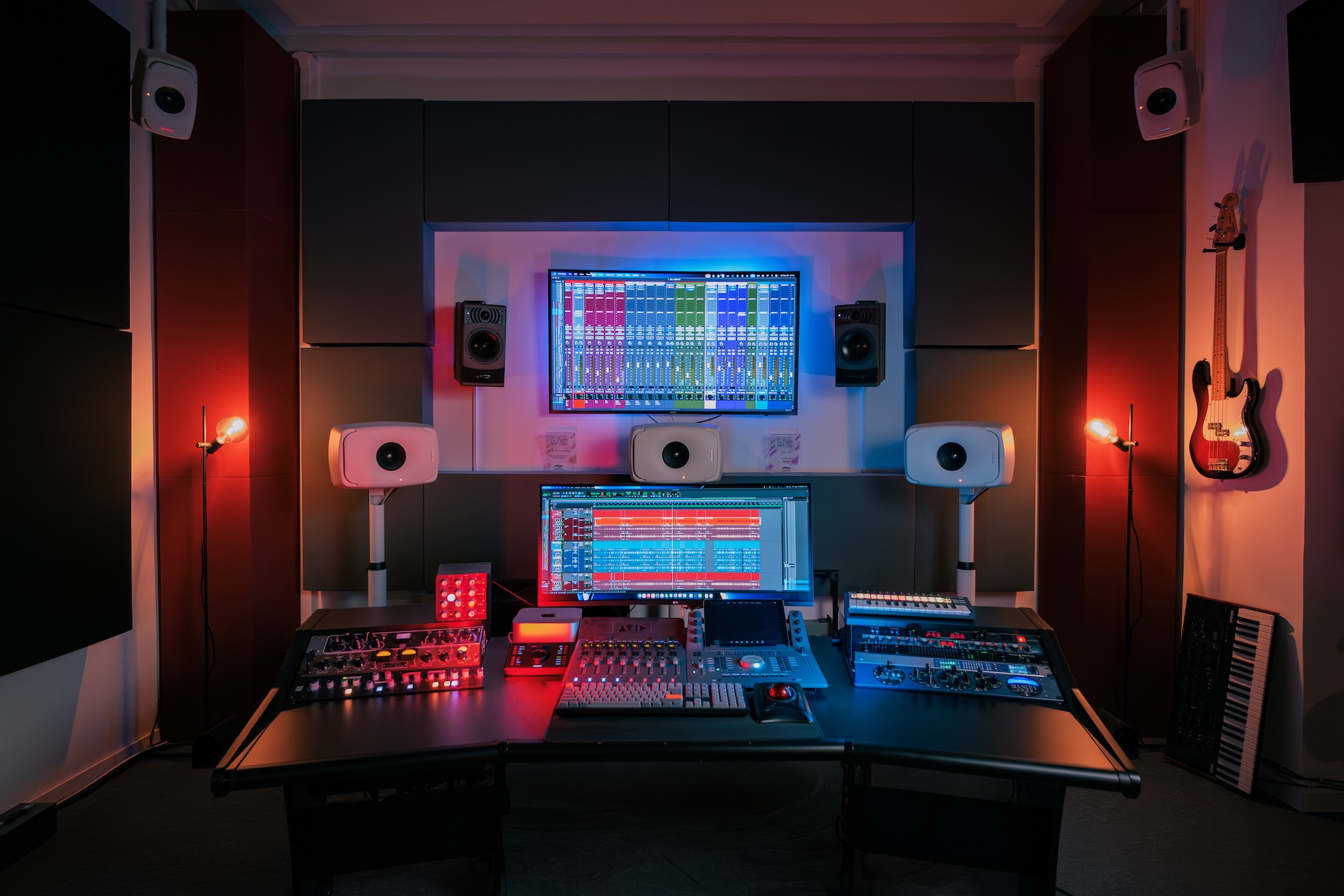
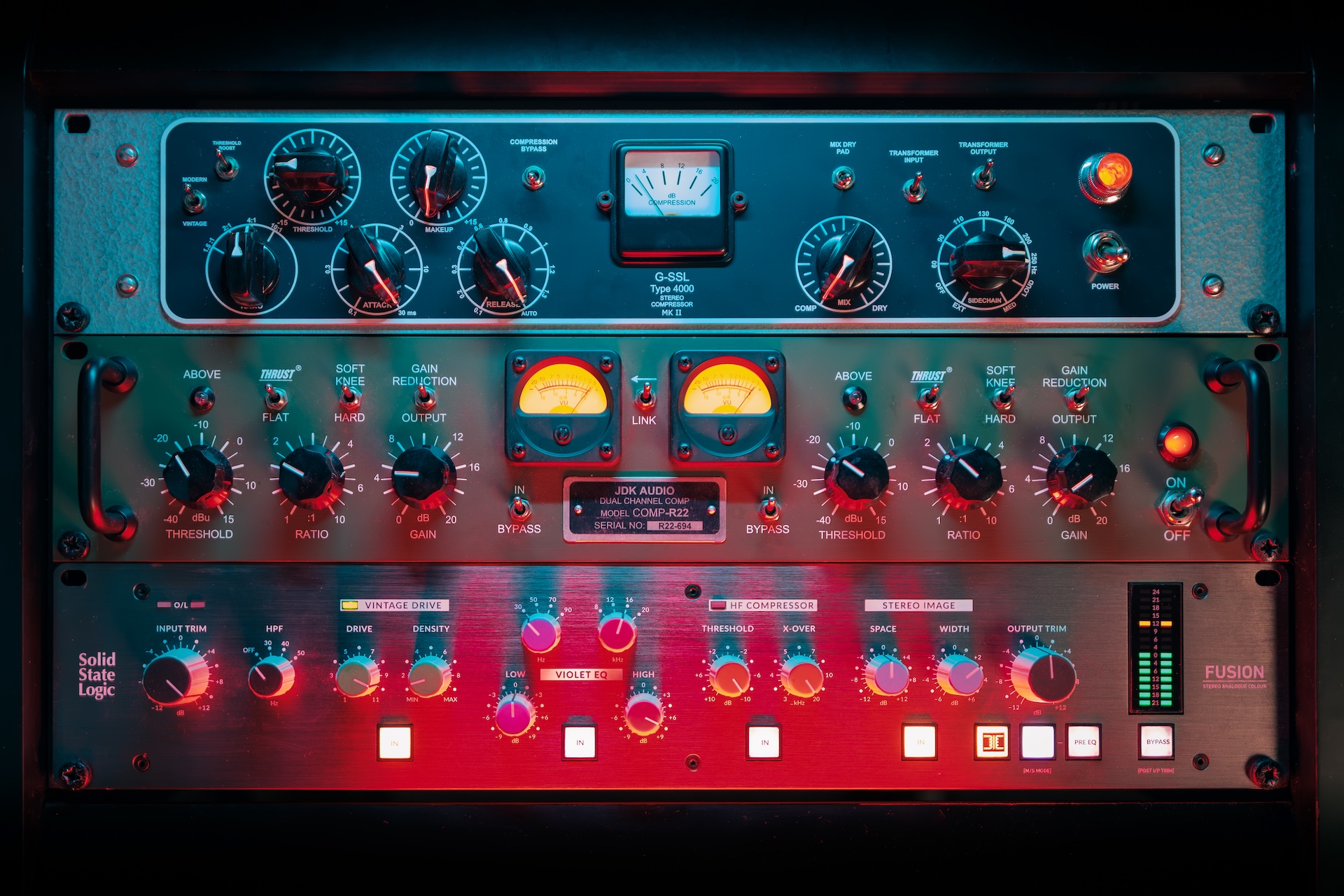
We work with a hybrid mixing workflow, which means that alongside software-based mixing, we also rely on outboard gear. The recording chain, compressor, and EQ section are entirely analog. The heart of the studio is the AVID MTRX Studio interface, complemented by an RME M16-20 Pro converter to integrate the analog gear.
The monitoring system is centered around a 12-speaker Genelec setup, controlled by the Genelec UNIO system. This allows for even more precise listening.
Time alignment and minimal corrective EQ adjustments ensure the very best listening experience in the sweet spot.
As for the “B” monitors, we use a pair of PMC Result6 speakers, which provide an excellent complement to the main monitoring system. Interestingly, they actually work better for rock music—even though they’re not full-range monitors.
Which Genelec speakers and subwoofers have you opted for in the studio and why did you choose them?
We began the studio project by focusing on the room itself—its acoustics and structural redesign. Based on the room’s dimensions, the optimal monitoring solution was a Genelec system consisting of 8351 monitors for the LCR channels, 8341 monitors for the surrounds, 8331 monitors for the overhead channels, complemented by a 7380 subwoofer. The entire system was then calibrated using Genelec’s GLM software, bringing everything together perfectly. Combined with the room’s already excellent acoustics, the calibration maximized the system’s performance.
What challenges did you encounter when integrating Dolby Atmos into the studio build, and how did you overcome them creatively?
Well, we spent quite a bit of time on it. Several of my friends helped enormously with the build-out, and I’m very grateful for their support. I had never built a Dolby Atmos system before. Compared to a stereo control room, an Atmos room requires far more advanced acoustic planning. The treatment is significantly more complex, as in addition to managing low-end buildup, we also had to fine-tune decay times across the entire frequency spectrum due to the much higher number of sound sources. The monitoring system at Dér Sound Studio is a 7.1.4 Genelec setup.
Each speaker requires three separate cables, all of which we built ourselves: one for power, one XLR for audio, and one Ethernet. The Ethernet cable is essential for Genelec’s GLM DSP calibration, as it enables all 12 speakers to communicate with the UNIO controller. After countless hours of soldering, splicing, and crimping, when the system finally came to life for the first time, I actually teared up. That moment I will never forget, it was like watching your child take their first steps or say their first words.
I learned a huge amount through this project: a bit of electrical wiring, a bit of Ethernet network building, and endless solderins. We had to pull several hundred meters of cable to bring the entire system to life.
It’s also worth saying a few words about the acoustics. The multichannel speaker setup required much more complex design work than a stereo listening environment, but Lukas handled it with incredible professionalism. A lot of intricate treatment elements were needed, and installing them wasn’t easy either, given the high ceilings in the room.
What key factors guided the selection of the technical equipment for the Dolby Atmos-equipped studio?
For the interface, we chose the AVID MTRX Studio. It has the best converters available on the market, and its DADMAN control software is absolutely uncompromising. That said, it’s not exactly plug-and-play—let’s just say having some programming skills is quite useful if you want to get any sound out of it.
The Genelec UNIO system completely stole my heart during the workshop. The ecosystem it offers is truly unique in the market. From sound production to control and measurement, everything is alligned and precise.
As controllers, we went with an AVID S1 and an AVID Dock. Both are fully programmable, their DAW integration is the best in the market, and they work beautifully not only with Pro Tools but also with Logic, which is just as important for me. As a nice extra, they even control the MTRX Studio itself.
We also needed a premium-quality converter alongside the main interface, since the I/O count alone wasn’t enough to handle both the Atmos system and the outboard gear simultaneously. For this, we brought in the RME M1620 Pro converter. There’s not much more to say—RME is simply brutal in the best possible way!
With streaming platforms increasingly supporting Dolby Atmos, what incentives do you think are needed for Hungarian productions to begin exploring this format?
Honestly, I think the main problem is that people here still don’t really know this format, and even if they’ve heard about it, they usually have the wrong information. For example, one of the most common questions is: “If I don’t have such a sound system at home, how could I even enjoy it?”
Well, if a streaming platform like Apple Music can play the mix in Atmos, and your headphones are capable of handling it (and these days, more and more are capable, even a pair of AirPods can do it), then you can already enjoy a much more complex musical experience while riding the subway.
Stereo and Atmos mixes can absolutely go hand in hand. One doesn’t exclude the other. If you upload your music in Atmos, the platform will promote it more, more people will listen to it, and you’ll earn more royalties. It’s really a win-win situation.
How do you see opportunities for the Hungarian pop music scene to connect internationally, and what strategies could help increase its presence in global music circulation?
On digital platforms, there are no borders: if a production is competitive in sound quality and overall performance, it can enter the global circulation just like any Western release.
I believe that today, the Hungarian pop music scene has far more international opportunities than ever before.
Of course, this requires a conscious strategy: a strong visual presence, good marketing, and the openness to plan not only for the domestic market but with an international audience in mind from the start. I see Dolby Atmos as a gateway that can provide extra visibility: if a Hungarian artist releases music in the most modern format right away, it’s easier to get onto major playlists or featured recommendations.
For more information, check out their website: www.der-sound.com


