Carlos Rodgarman Q&A: Mixing Michael Jackson in Atmos
Can you please introduce yourself and tell us a little bit about what you do, and how you ended up doing it!
My name is Carlos Rodgarman. I’m a grammy and Latin Grammy nominated music producer, composer and engineer with a special love for Dolby Atmos.I’ve been lucky enough to have worked with a diverse range of projects, from Paul Anka, Michael Bubble, to Juan Gabriel, Gloria Trevi and many more.
Music has always been in the family both Mom and Dad side, so…. It felt the most natural thing for me since I was a kid.
You recently worked with Humberto Gatica on the new Dolby Atmos mixes of five Michael Jackson albums. How did you become involved in the project?
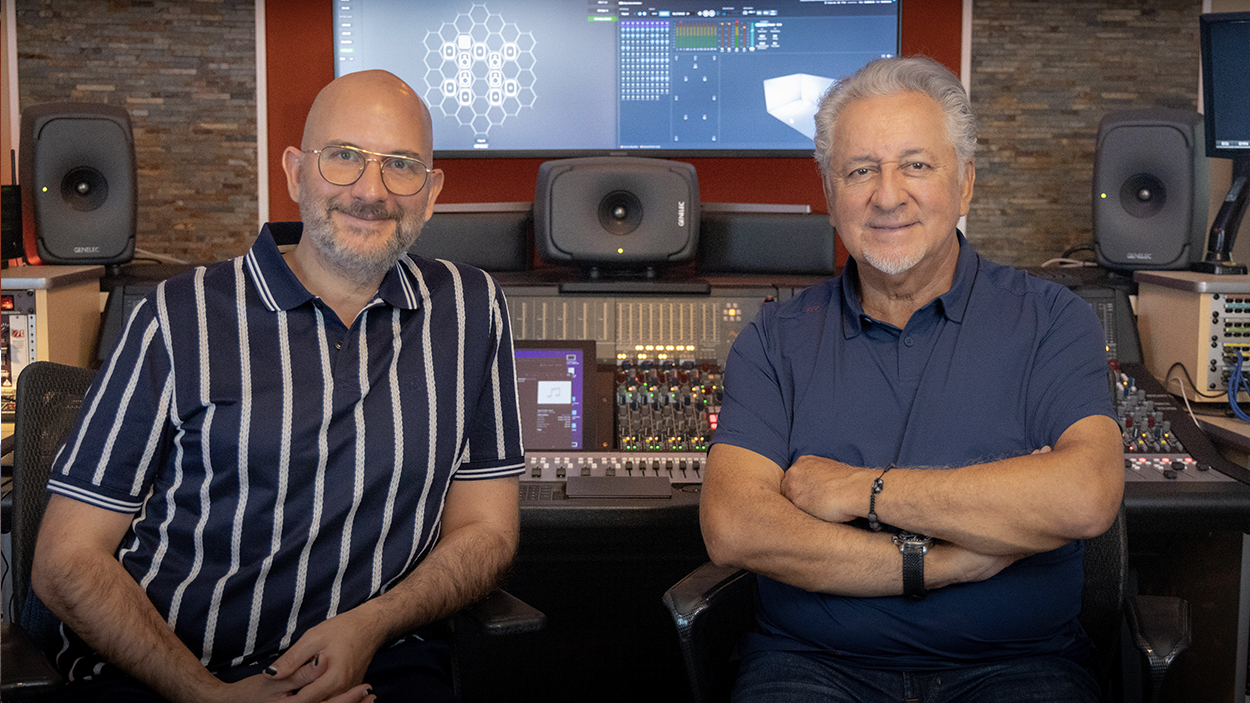
I’ve been working with Hum for many years, and recently Sony and the MJ Estate called him to mix stems for many of the MJ records for the movie Michael, since no mix stems existed, only the original tape transfers. As he worked on those stereo Stems, the opportunity arrived to create all his discography in Dolby Atmos. We all know what happens to artist’s catalogs when a Bio Pic is done….. so Immediately we got to Work and it’s still one of those jobs that I could only dream about!
When working on such iconic albums, how do you stay true to the original stereo mix while taking advantage of the creative possibilities in immersive audio?
The main challenge is to recreate the “feel” of the songs that we all have years of memories to, so that it has the familiarity that we expect, but at the same time, we are creating a new experience in the immersive format. Remember we are not replacing the original Stereo mixes, so this had to be a new experience, but carefully designed so it doesn’t feel like a different piece all together. We made some choices on spreading all the musical arrangements, and since we have more space now, we could feature some things that before you didn’t have so much space for.
Did you notice any new details while working with the original multitracks that are now more audible for listeners in the Atmos mix?
Absolutely!, these records are full of incredible arrangements and very rich songs so now we are able to present to the listener so many colors that before were not so obvious; this happens in many songs. A couple of examples come to mind, the piano on Man in the Mirror when the gospel choir comes, the amazing string arrangement on I can’t Help It. Even on Black or White, there’s guitars and effects that now have new life.
As you were auditioning the different tracks on the various records was there much cleaning up you had to do first?
Not so much cleaning up, a bit here and there, but you really don’t want to start making everything “perfect”, then it would turn into a different experience. I would say the biggest time consuming job was lining up the Atmos to the Stereo. Reason being that originally it all was recorded, mixed and mastered analog in tape, and on top of that many tracks were sped up in mastering, soooooo…. When I start to open the new stems from the multitracks, they were at different key and speed! So I had to find how much to speed up, and then keep compensating thru each song because of the drift. Let’s say I needed a bit extra coffee for that!
Was there a consistency of the sound of the different records since they were done years apart?
It depends on what albums we are talking. Off the Wall and Bad, have the consistency of many musical elements, (and Quincy :)) type of horns, strings, etc. even though obviously by the time of Bad we had now sequencers and midi, so that changes the production, but it still sounds from the same “family” to me. Once you get to Dangerous, History, or later Invincible, you start to hear the different eras in the Drum sounds, keys etc. Obviously the biggest consistency is MJ and his brain behind every single part!
Can you give an overview of the key equipment you use in the studio – consoles/DAW/processors/sound sources/signal distribution etc.?
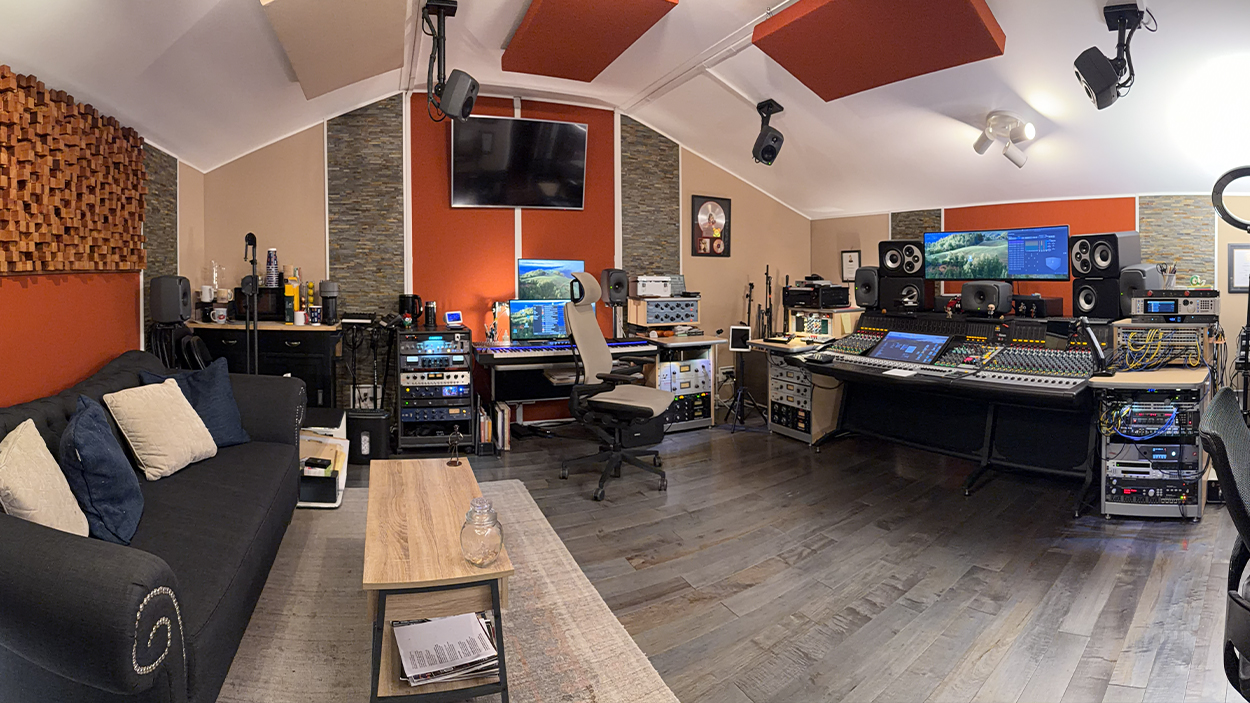
My studio is centered on a Neve Genesys Black 3D console, it’s a full analog console with ability for digital automation and control of Dolby Atmos Objects and monitoring. For DAW I use Protools HDX for all mixing both in Stereo and Dolby Atmos, I have a Genelec 7.1.4 monitoring system, but when I have my arranger hat on I stay in Logic Pro. I have some favorite outboard that I integrate in the Atmos world; 2 Bricasti m7, an AMS RMX16, eventide H9000 and Tegeler reverb, but I also use some immersive plugins like the Liquidsonics verbs. I truly am on a hybrid system, that allows me to do my analog Stereo simultaneous with my Atmos Mix, that is very flexible.
Can you describe how you approach mixing in immersive, how it differs from stereo mixing, and what creative opportunities/challenges it presents?
It really is different mixing in stereo and Atmos. The obvious reason is the space, but it’s related to how your perception changes when you move something to the side or behind. It may need a different compression or EQ FX, etc, because we are changing how something Is perceived. This is why I still today I like to do my stereo mix & my Atmos mix. I never use a stereo fold from the Atmos mix because I don’t really have control over it.
The biggest challenge and mistake I hear sometimes is creating that immersive experience without “breaking” the mix, and then things don’t sounds together anymore, and on the other side…. When you are so conservative that it ends up being a stereo mix with some reverb behind!
Can you describe your Genelec monitoring system (format, models etc)? Can you tell us why you chose Genelec, and how the monitoring system helps you to work in immersive?
I have a 7.1.4 Genelec system with 8341 for the L-C-R, 8331 for the sides and surround, and 8320 for the sealing, with 2 Subs that manage all speakers.
The obvious choice for me was Genelec first because of the sound, one it being an industry standard, two the reason that Hum has been working many many years with Genelecs, and third I love the sound and imaging it gives me, and I know I can 100% trust that what I’m hearing in my room is going to translate anywhere.
Did you use GLM (Genelec Loudspeaker Manager) to calibrate your system, and can you describe what difference that makes?
GLM system was the second reason for me choosing Genelec for this immersive setup. Having so many speakers pointing in every direction, plus the room itself… I needed something that could calibrate the system and also work as a monitor controller so I didn’t need an expensive immersive controller.
The difference of having your system calibrated cannot be stressed enough. Otherwise, you are blind and all your hard work can be misguided! Also, the fact that it takes me 3 minutes to calibrate the system!
Besides the Michael Jackson albums, what other immersive projects have you worked on recently?
Recently I did several Orchestrations for Paul Anka’s latest Album (which I didn’t mix in Atmos, my good friend Jorge Vivo did on his own Genelec system), I’m working right now with Hum on a classical crossover project that will be obviously immersive. I would say that as of today 99% of the projects I’m involved with have an Atmos mix.
How do you see the future of immersive audio over the next few years?
In my opinion, the question “is it here to stay?” Is over. It is here and it’s going to keep spreading consumer adoption. The fact that more and more cars support it is very exciting, sound bars, TVs, now YouTube!, etc… my only hope is that soon we can deliver a headphone experience that gets closer to the speaker experience, since many people will stay with headphones, I think there’s room for improvement there.
My experience seeing people react for the first time to immersive audio in a good system is priceless. The comment I get all the time is.. “it’s like I’m listening to this song for the first time!” I think the possibilities are very exciting, and I look forward to more and more artists and producers to start having the immersive mind since the composition, arrangement to the recording.


