Genelec interviews German Songwriting Award-winning Music Producer Thomas Lemmer
When did you start producing, and what drew you into it?
I started my journey as a producer in my youth. Even before I fully understood what production really meant, I was deeply fascinated by music – not only by melodies and emotions, but also by the details in a recording. I remember listening very carefully to records and trying to understand why certain sounds moved me, why a mix felt warm or spacious, and how all the individual elements worked together.
My classical music education gave me a strong musical foundation, while my curiosity for sound, technology, and production gradually led me deeper into the studio world. Looking back, that combination of musical training, emotional sensitivity, and fascination for sonic detail became the foundation for everything that followed in my career.
You won the German Songwriting Awards in the category Music for Motion Picture – what did that moment mean to you?
Winning that was a very special moment for me. As someone who writes, composes, produces, mixes, and masters a lot of my music myself, it felt like a meaningful recognition of the entire creative process – not only of the composition, but also of the emotional world around it.
What made it especially moving was the feeling that the passion, vulnerability and intention I put into the piece had reached other people. This kind of music is very personal to me, so receiving an award for it was both humbling and encouraging. Considering the high level of artists and composers involved, I felt truly honoured – and, of course, very proud.
Can you tell us a bit about the track that won the award?
The winning track, 'Nocturnal Embrace', is a deeply intimate piano-led composition, gradually joined by warm cello textures that add emotional depth and a cinematic sense of space. For me, the piece represents a return to my roots, the piano, and to a more acoustic, vulnerable form of expression.
It's a quiet, reflective track built around simplicity, space, and emotional honesty. The title describes the feeling I wanted to capture: the sense of being embraced by the night, by stillness, and by a moment of calm reflection. Even though the arrangement is minimal, the piece has a strong emotional arc, which is why I think it also connects naturally with visual storytelling and the world of motion picture music.
The track was also released in Dolby Atmos. For my Atmos versions, I entrust the mixes to Eric Horstmann. We have developed a great working relationship over the years. My music benefits from his deep experience in immersive audio, and I have a strong creative partner by my side who fully understands my vision.
The two-track release also includes 'Variation by Oine', a beautifully reduced solo piano reinterpretation by my longtime collaborator Oine, which shows the same emotional core from a different perspective.
What do you think made the production/engineering stand out?
I think what made the production stand out was the attention to detail and the balance between intimacy and depth. The arrangement is minimal, but every sound has a purpose. The warmth of the piano, the emotional cello lines, the carefully placed field recordings, the space around the instruments, and the subtle sound design all work together to create a calm and embracing atmosphere.
I spent a lot of time shaping the tone, dynamics, room impression, field-recording layers, and sense of depth, so the listener could feel very close to the performance while still being surrounded by the atmosphere of the piece.
How do you approach production from an engineering perspective?
For me, production and engineering always start with emotion. The music has to touch me in some way before I think about technical decisions. Every sound, every mix decision, and every small detail must support the story of the piece and help the listener connect.
Technical knowledge is important, of course, but I try not to let technology become the focus. Listening is the most important part of the process: listening to what the song needs, what should be emphasized, and what should be removed to let the emotion shine even more. Sometimes the best engineering decision is not to add something, but to create more space.
I see production as a combination of sensitivity and precision. The technical side should serve the music so naturally that the listener does not think about the production - they simply feel the piece.
What are the small details you obsess over when working on a track?
I pay a lot of attention to chords, melody, structure, texture, dynamics, and the emotional weight of every sound. With piano, for example, it is not only about the notes being played, but also about the touch, the decay, the resonance, the room, and the way the instrument breathes between phrases.
I often focus on very subtle details: how long a reverb tail should be, how much air a sound needs around it, whether a certain frequency feels too close or too distant, how a field recording blends with the music, or whether a small automation move can make a phrase feel more alive. These decisions may not always be obvious to the listener, but together they shape the emotional experience.
I also work in different creative roles and stages. When I compose, I focus on the song itself – the harmony, melody, arrangement and emotional direction. During mixing, I become much more analytical about balance, depth, sound design, space, and movement. When mastering, I can spend a lot of time choosing the right EQ, testing different compressors, or finding the exact sweet spot that lets the track open up without losing its soul.
Do you have any habits or processes that define your sound?
One important part of my sound is my hybrid workflow. I use a lot of outboard equipment, especially analogue and digital synthesisers, and I like the way real instruments and hardware respond. They invite small imperfections and happy accidents, which often make a production feel more alive.
Another part of my process is building an atmosphere before I think too much about the final arrangement. I often start with a texture, a chord progression, a field recording, or a small emotional idea and then build a world around it. At the same time, my sound is defined by my musical taste and by the emotional space I am searching for.
Can you describe your studio setup in Bramsche?
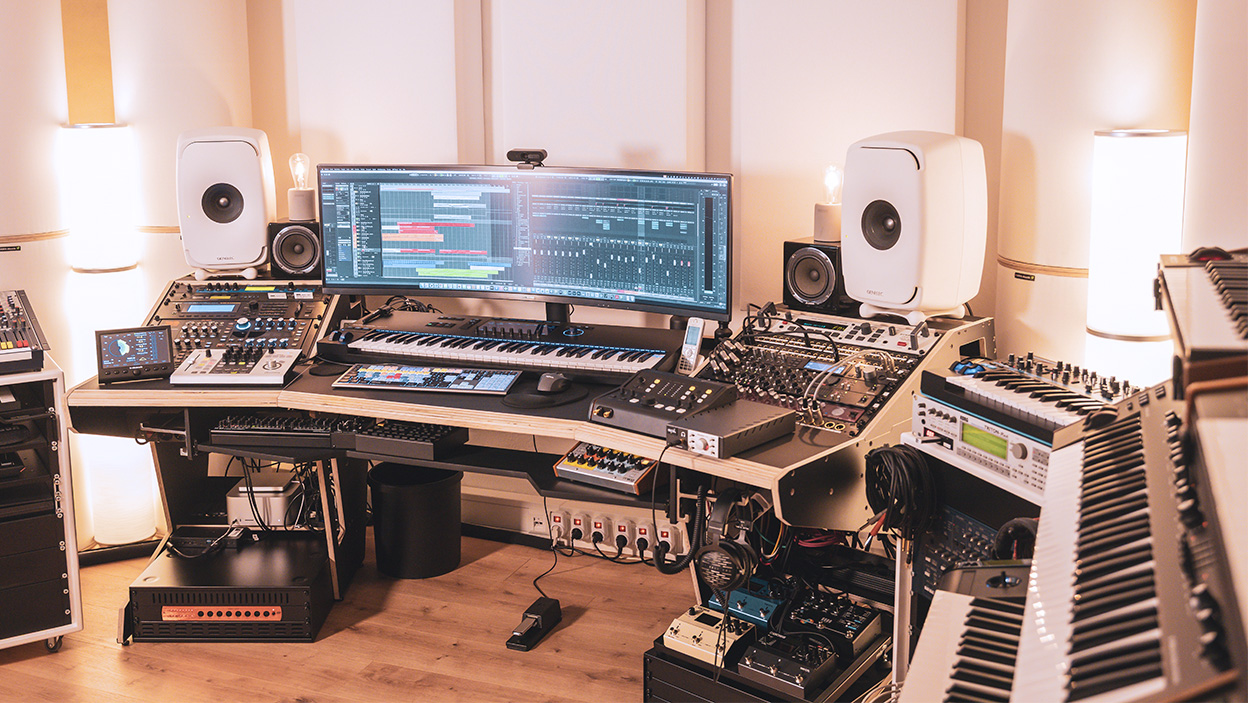
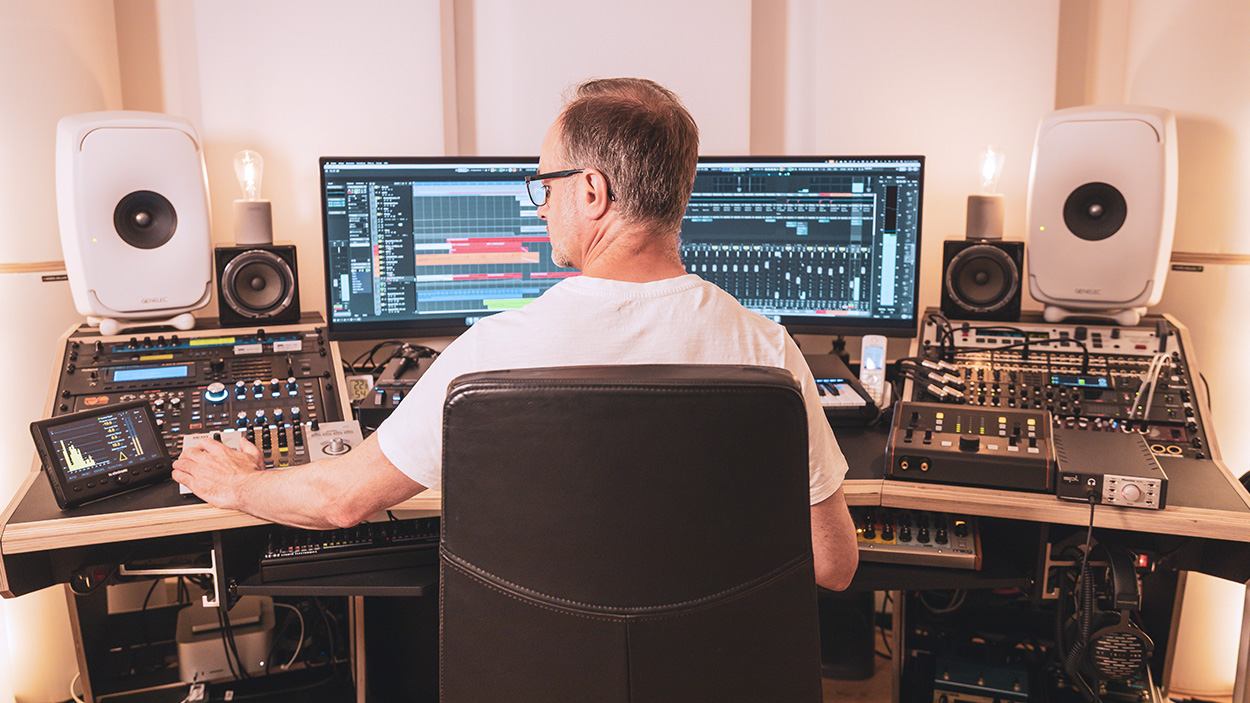
My studio in Bramsche is a hybrid setup that combines hardware instruments, outboard gear, and software. Alongside outboard synthesisers, I also work with VST instruments when they are the right tool for the sound I have in mind.
My main DAW is Cubase Pro. The centre of the audio setup is a MOTU 828 (2024), expanded with Focusrite Scarlett OctoPres and an SSL Pure Drive Quad. All devices are routed through patch bays, which gives me a lot of freedom and flexibility. I can quickly connect instruments, processors, and recording chains without interrupting the creative flow.
What role do monitoring and accuracy play in your workflow?
Monitoring and accuracy are essential in my workflow. Because I am so focused on details and always aim for a sound that translates well, I need a room and monitoring system I can trust. I do not want to constantly second-guess what I am hearing or rely on checking every mix on many different systems before I can make decisions.
A trustworthy monitoring setup gives me confidence. It allows me to judge low end, depth, stereo image, reverbs, dynamics, and small tonal changes with much more certainty. For me, accuracy is not just a technical luxury - it is the foundation that lets me stay connected to the music and make better creative decisions.
At what stage of production is sound precision most important to you?
Sound precision becomes especially important once I move into detailed sound design, mixing and mastering. In the early creative phase, I try to stay open and intuitive. I do not want to interrupt the emotion too much. But as soon as I start shaping the sonic world of a track, precision becomes essential.
During mixing, I need to hear exactly how sounds interact, how much space they need, and whether the emotional focus is still clear. In mastering, that precision becomes even more critical because the final decisions are often very small, but they influence the entire listening experience. At that stage, reliability and trust in the monitoring chain are everything.
You’re using the 8351Bs — how do they fit into your setup?
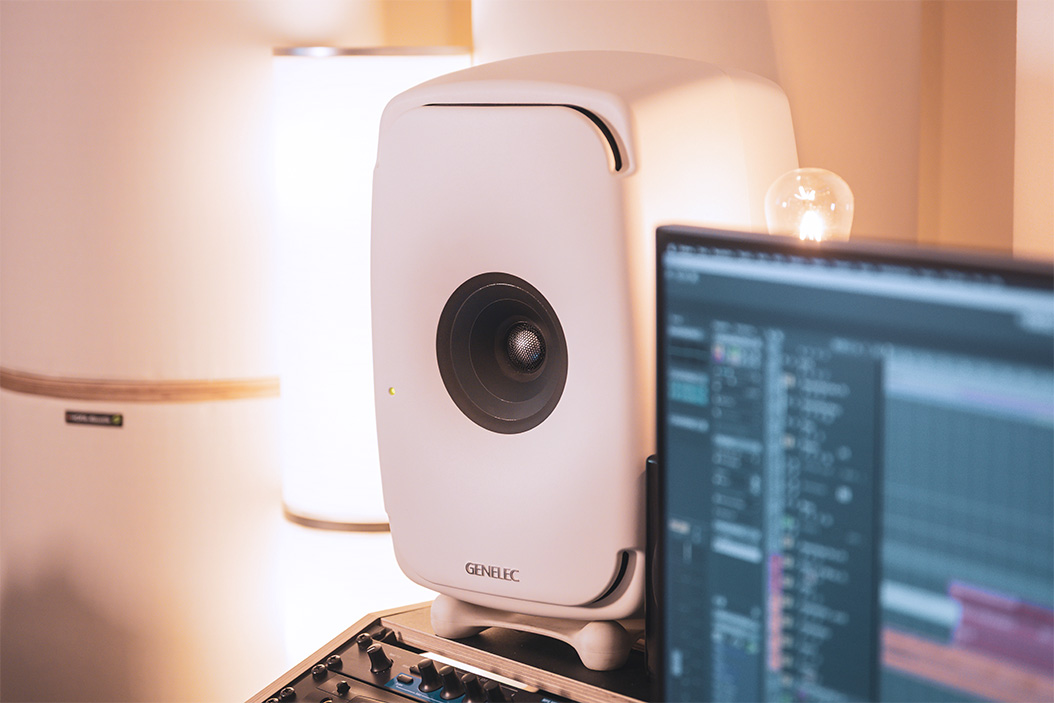
The 8351Bs are my main reference monitors and the monitors I work on most of the time. I compose, produce, mix and master mainly on them.
What I appreciate most is their reliability. The frequency response, stereo imaging, depth, and resolution all give me the feeling that what I hear is very close to the truth. I also like the different colour finishes Genelec offers – which make the monitors feel more personal in the studio – but above all, it is the precision and trust that matter. I would say they are among the most important devices in my studio.
What difference do they make in your daily work?
They make a huge difference because they give me confidence. When something sounds right on the 8351Bs, I can trust that it will translate well to other systems. That saves time, but more importantly, it allows me to stay focused on the music instead of constantly questioning technical decisions.
I also enjoy how detailed they remain even at lower listening levels. That is very important for long sessions, especially when mixing or mastering. I can hear subtle changes in tone, depth, reverb, and dynamics without having to work too loudly. This makes the daily workflow more precise, more relaxed, and ultimately more creative.
How do they help you make better mix or production decisions?
They help by giving me honest feedback. If the low end is not right, if a reverb tail is too long, if the stereo image is not focused, or if a frequency range is becoming harsh, I can hear it very quickly. That makes my decisions faster and more reliable.
I have worked with Genelec monitors for many years, and they have never disappointed me. The feedback I receive for my mixes and mastering projects – both my own music and work for other artists – confirms that the decisions I make on them translate well. That trust is priceless, especially when working on detailed, emotional music where small changes can have a big impact.
Can you recall a moment where your monitoring made a real difference?
A good example is working on intimate piano-based music like 'Nocturnal Embrace'. With that kind of production, everything is exposed: the resonance of the piano, the cello texture, the field recordings, the reverb, the noise floor, the stereo image, and the emotional distance between the listener and the instruments. The 8351Bs helped me judge how close the piano should feel, how much room the cello needed, and how far I could go with the atmosphere without losing the intimacy.
What’s next for you after this award?
I am currently preparing my next solo album, 'DREAMSCAPES II', which is scheduled for release on 7 August. It continues the world I began with 'DREAMSCAPES', but expands it further into light, stillness, memory, and inner space. The music is cinematic, atmospheric, and very detailed, with warm textures, spacious sound design, gentle melodic movement, and a strong focus on calm, reflection, and emotional depth.
For me, 'DREAMSCAPES II' is not just a collection of tracks, but a complete listening world. It is created for moments of relaxation, focus, and dreaming – but also for listeners who enjoy discovering small sonic details over time. The album is planned for release in Dolby Atmos and high-resolution audio, as well as on CD and vinyl, so I am very excited to present it as both an immersive and physical experience.
Are there any other projects or collaborations you're excited about?
I love working with other artists I admire – people whose creativity, musical standpoints, and personal approaches open up new perspectives. That exchange is very fruitful for everyone involved, because collaborations often lead to places I would not have reached on my own.
I'm looking forward to new creative work with artists such as Tony Sieber and Christoph Sebastian Pabst, and I am always interested in projects where different musical worlds meet in an honest and emotional way. Whether it's ambient, neo-classical, cinematic, or electronic music, I am most excited when a collaboration creates something that feels personal, atmospheric, and meaningful.
