Genelec 8381A becomes Audio Critic Yoshio Obara’s absolute reference
“When I first heard the 8381A, I felt a sense of life, or vitality.”
“For me, a reference is exactly that, a standard. And not just any standard, but an unwavering one. It must reproduce all the information contained in the source material without leaving anything out, while adding nothing and distorting nothing. That, to me, is what makes a sound a true reference. Of course, that calls for fidelity and credibility. You might therefore associate the concept with measuring equipment, and certainly, studio monitors are expected to have that kind of character. When I first heard the 8381A, I felt a sense of life, or vitality. There is an organic, almost physical quality to the sound, as if I am standing face to face with a living presence.”
With more than 30 years of experience as an audio critic, and a lifelong passion for music, Obara says that his own approach to sound has evolved as he has encountered an increasingly wide range of music.
“I used to enjoy immersing myself in the jazz I loved. But as I listened to more and more different kinds of music through my work, my priorities gradually changed. In simple terms, I would say that I moved from focusing on the sound image towards a more holistic perspective on the sound field. At the same time, the way music was produced changed dramatically from the 1980s through to around 2000. And the advances in music production over the past 20 years or so – particularly in the way low frequencies are handled – have been remarkable. So naturally, I felt that the role of the monitor loudspeaker had to evolve as well. I had always felt that Genelec was the company that had pursued this most seriously and consistently. But I still wasn’t quite ready to bring studio monitors into my home. After all, I had been completely in love with the sound of my TAD Reference One for many years.”
Obara had never been dissatisfied with his long-time reference loudspeakers. But his encounter with the 8381A changed everything.
“It all started when I was asked to review the 8381A for a publication. Honestly, I thought it would be a straightforward assignment: go there, listen to the loudspeakers and write about my impressions. I never imagined it would turn into something this significant! After all, as I said, I was deeply attached to my TAD Reference One. My first impression of the 8381A was simply: ‘What is this presence?’ I was particularly struck by the four dome midrange drivers in the upper enclosure. And then there was that all-black, rugged design. But the sound completely knocked me sideways. It was incredibly fresh and vivid, yet it never fell apart no matter how loud I played it. Above all, it never became aggressive or fatiguing. The bass had tremendous depth and speed, with absolutely none of the sluggishness you might expect. I remember thinking, ‘There are three 15-inch woofers playing here – so how does it do that?’ It had almost everything I now look for in a loudspeaker.”
“When I got home, I simply couldn’t get that sound out of my head. Even when I listened to my TADs, I found myself distracted, wondering, ‘What would that sound be like in this room?’ The idea kept growing in my mind until it became an obsession. I also started thinking that, physically and energetically, if I was ever going to bring in a new pair of loudspeakers, now was the time. Five or ten years from now, it might be much harder. Once I started thinking that way, I simply couldn’t sit still. So I contacted Genelec Japan!”
“Using equipment you can trust is essential if you want your readers to trust your judgement.”
Replacing Obara’s reference system proved to be a major undertaking, including bringing in the Genelec 8351B from The Ones series, which is used as the rear-channel loudspeaker. For an audio critic, replacing reference loudspeakers that had been used for approximately 17 years is a significant decision. But Obara’s enthusiasm for the new system is unmistakable.
“From a reader’s perspective, a ‘reference’ needs to be something universal. In other words, when someone reads my review, they should be able to think, ‘So this is the speaker he uses, this is the amplifier driving it, and this is how he arrived at that assessment.’ Using equipment you can trust is essential if you want your readers to trust your judgement. If you’re an enthusiast, you can build your system around whatever you like – vintage equipment, DIY components, anything you want. But a critic cannot work that way. Readers need to be able to understand and visualise the operation and sonic performance described in an article, and there needs to be a degree of reproducibility. That is how I have approached my work throughout my career, and it is the kind of equipment I have chosen to use. To me, that is what being a professional audio critic means.”
“The most important thing is that Genelec loudspeakers have a consistent sonic character across the range. The sense of energy and frequency range may differ between the entry-level G One and the flagship 8381A, but their tonal character and overall sonic feel remain consistent. That means an engineer who works with large Genelec monitors in the studio can use a smaller Genelec as a nearfield monitor when working elsewhere, without having to adjust to a completely different sound. I’m really looking forward to using the 8381A in my work, and I’m genuinely excited about it. What I feel most strongly right now is that my ears didn’t let me down. My confidence as a professional has never been stronger.”
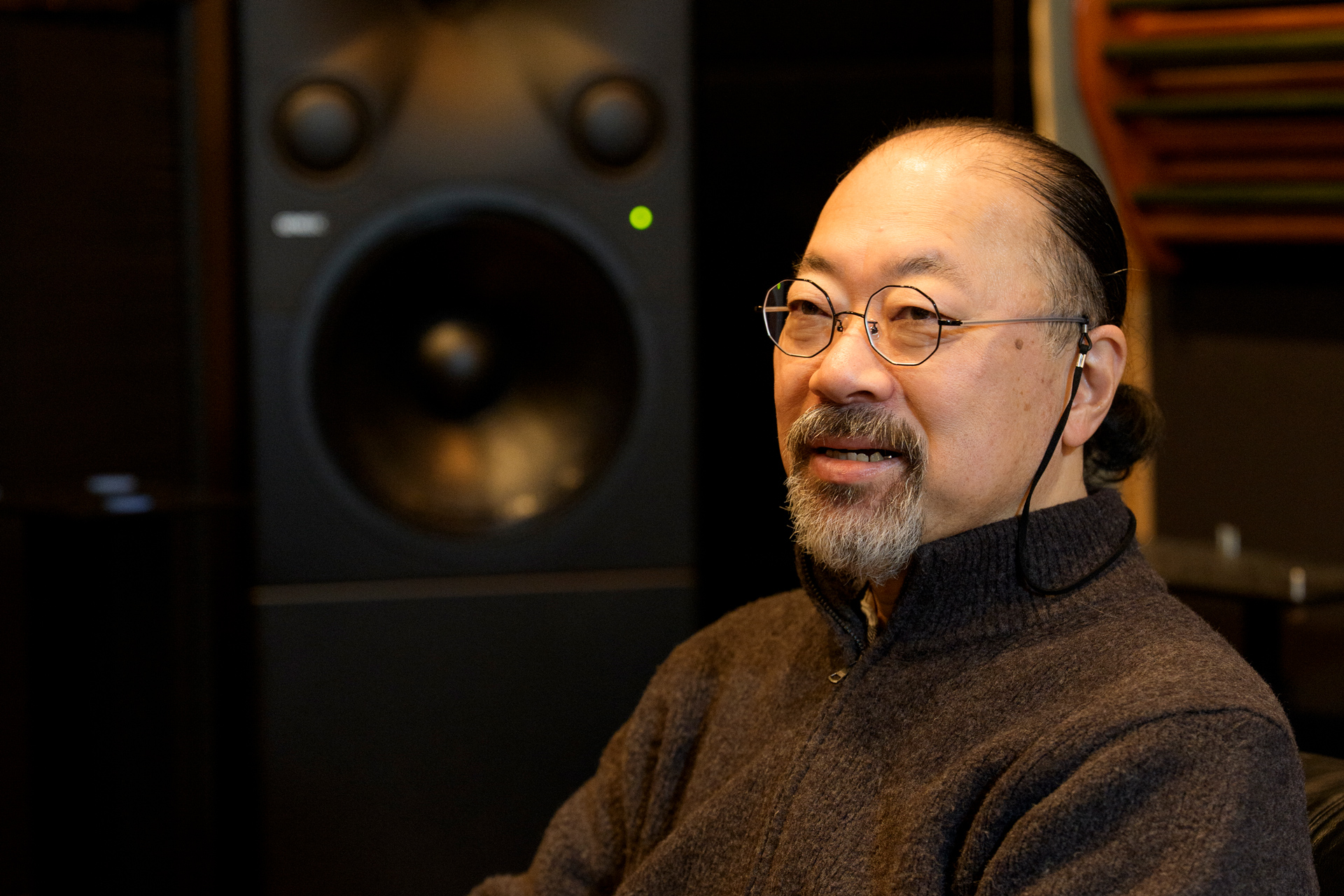
Yoshio Obara
Audio critic
With a background as an engineer at a measurement equipment manufacturer and later as an editor, Yoshio Obara moved into the fields of audio and audiovisual critique. Known for his sharp, incisive reviews and user-focused approach, he has built a strong reputation among audio enthusiasts.
Today, from his “Kaikoku Theatre” overlooking the sea in Uraga, Obara explores and puts into practice virtually every aspect of audio, from analogue and high-resolution audio to headphone listening, immersive audiovisual systems and DIY audio.


