Immersive Talk with Grace Ritter
Can you tell our audience a little about yourself?
Hey I’m Grace Ritter. I’m currently an owner and Studio Manager/Audio Engineer for Covered Bridge Recording in Nashville Tennessee. I started as a Mechanical/Electrical Engineer at Rochester Institute of Technology in New York and Finished with a BS in Audio Engineering from Full Sail University. I’ve been a drummer since I was 7 years old and grew up in a family that loved music. I made the switch from Mechanical/Electrical to Audio Engineer after a summer interning at Blackbird studios. Since then I’ve interned at a number of studios while I was in school, and one post-grad. I first got introduced to immersive audio and Dolby Atmos during my time at Blackbird. Then while I was in school I applied to a program to learn and get certified as an Dolby Atmos Engineer. After completing the course I was hooked and wanted to delve in deeper to Immersive Audio. After graduation I knew I wanted to go back to Nashville, and start my own Immersive Mix room for myself and other young engineers. It just worked out that we found a great location for a studio that had more opportunities than just a mixing room. So, we decided to build out the studio into a more full-service tracking studio with Immersive capabilities. We are about to reach our 1st year of being open and we have been lucky enough to be servicing both young and upcoming artists to multi-Grammy winning artists across every genre of music. It’s been an exciting start!
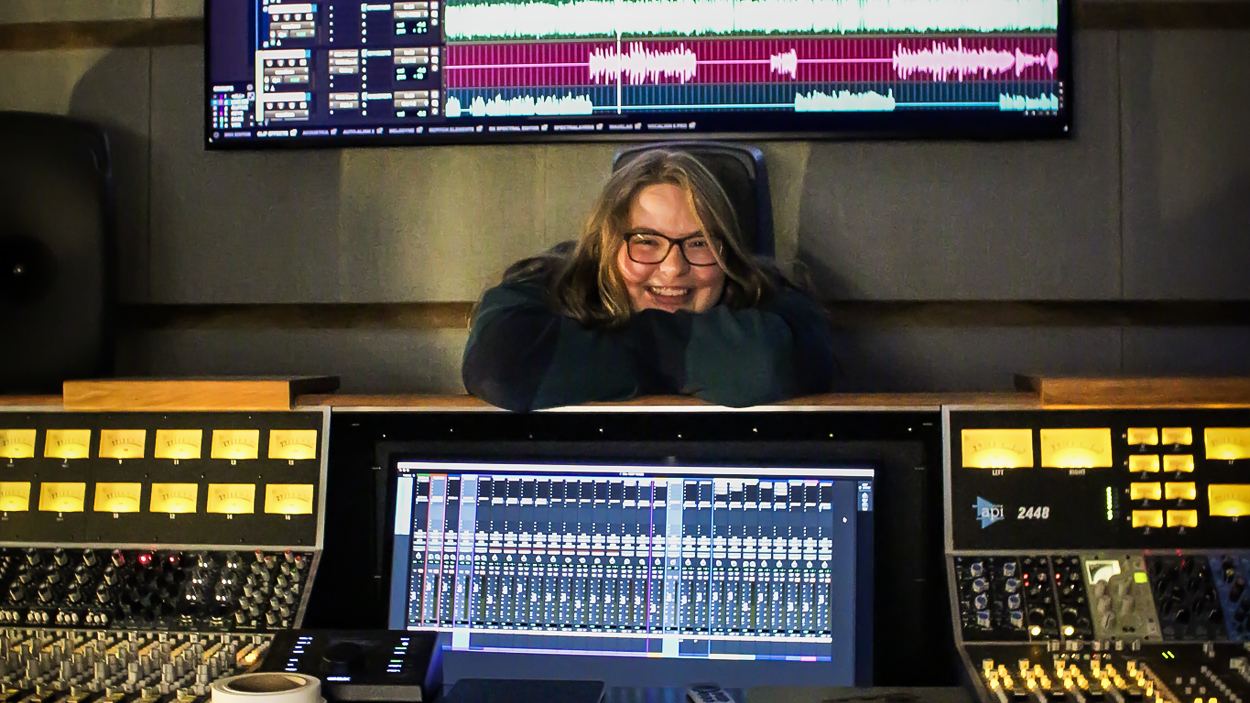
Can you tell us about your studio space?
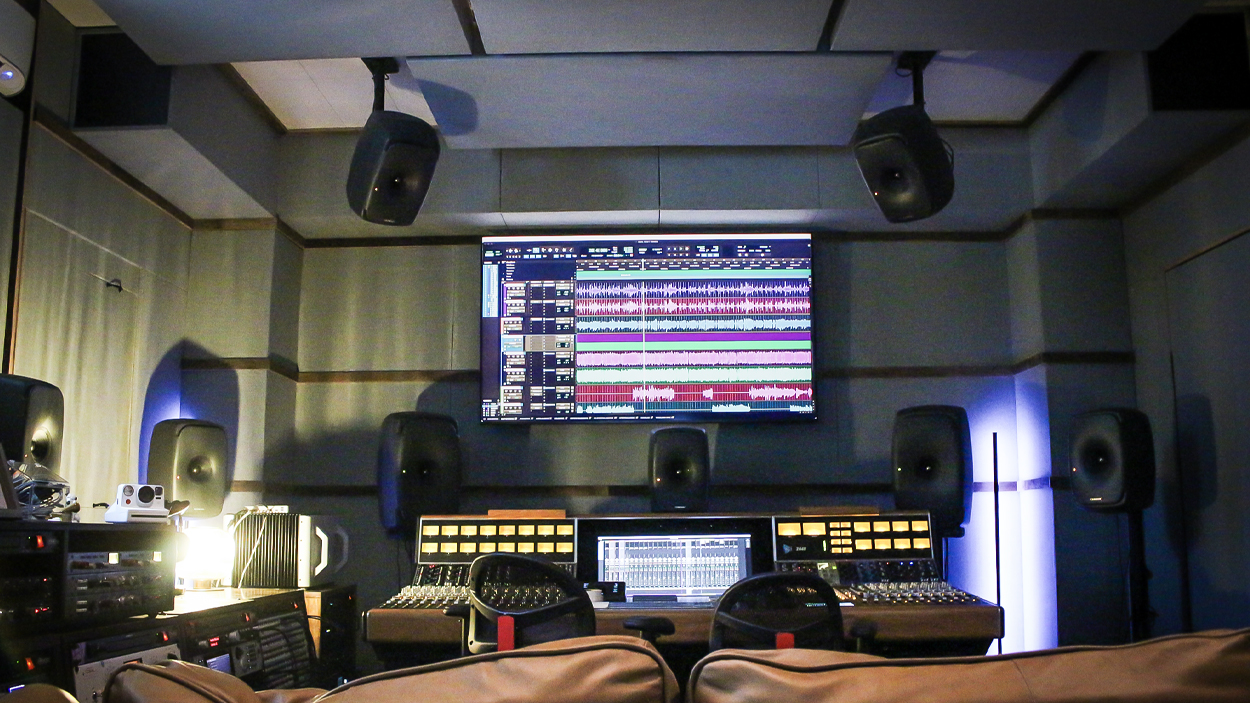
The studio is located in Bellevue, Tennessee just west of Nashville. The space was originally owned by Tommy Wiggins, a Mastering engineer under the name of Tommy’s Tracks. He had a studio in a converted garage that had room for a production desk and two iso booths for drums and vocals. While it was great for mastering, our plan was to convert it to an Immersive Mix Room. Throughout the process of designing we realized we wanted to convert more of the space into a full-service studio. We completely rebuilt the control room to accommodate a console and a 9.1.4 Genelec system, converted the office to a synth/keys room, turned the dining room into a piano room, the living room into a producer’s lounge and guitar world. At that point in time we had friends of ours check the space out, and shakeout recording in those areas. During it we gave them a tour of the rest of the space, and they suggested that we turn one of the rooms into a live room. It had a tall ceiling so that worked well. Recently we converted another room into Studio B which is now a mix room and a podcast space with small-form recording capabilities. It is all connected so that it can become another Iso booth for Studio A. We linked it all with video and cameras so everyone can see each other and communicate. When booking the studio the whole space is the studio. The living room and full kitchen are available as a hang for the clients. We also have an outside stage and venue for about 100 folks for parties, song writer rounds, and record release parties. The studio also includes an outdoor lounge, a pool, pickleball court, and basketball hoop, for any breaks or to get more sun during the studio day. We also have private parking and plenty of room to park two tour buses behind the gates.
Can you give an overview of the key equipment you use in the studio?
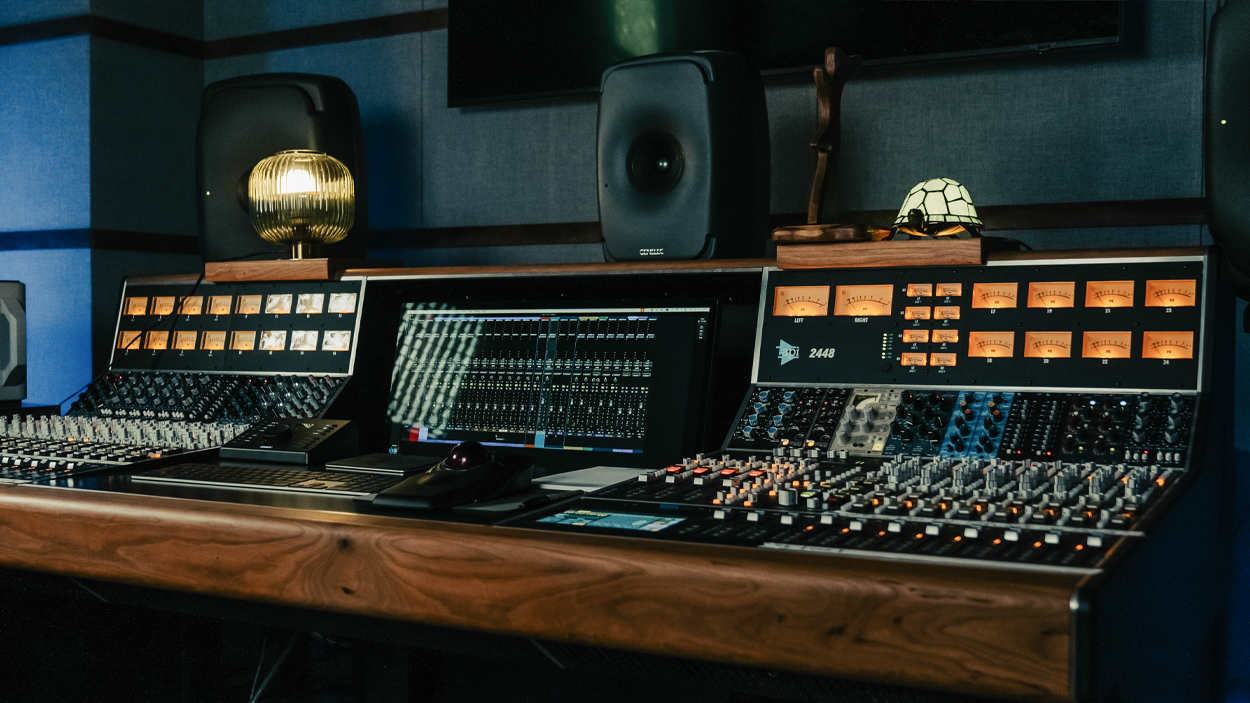
The center of Studio A’s control room is the API 2448 console with full automation and flying faders and a full complement of analogue eq’s, and compressors in the 500 series slots, and penthouse. Then we have about 30 pieces of analogue and digital rack gear, mostly Stam audio versions of Fairchilds, 1176, LA2As, Neve 39609 compressors, Distressors, dbx 160’s etc. The rack includes additional 20 analogue preamps strips, including 10 - 1073, 2 - 69 Helios, 2 - V72, 2 - 312 tube, 2 - 1073 tube, and 2 Firechild (670 style), all from Stam Audio. The DAW we primarily use is Pro tools, but Logic and Ableton are available as well. Our interface is the Antelope Galaxy 64. And our monitor system is a 9.1.4 Genelec system. On our 9320A SAM Reference Controller, we have our different monitoring set up so that we can switch between Immersive, Stereo Console, and Stereo Digital. And on the Console our Mains are though the Genelec's, with Alt 1 being NS10’s, and Alt 2 being Auratone's. The whole studio is tied together with Black Magic Design AV and 9 cameras.
We have a full selection of equipment and instruments, with over 40 electric, bass, and acoustic guitars, 25 guitar amps, a Steinway B and upright piano, and all the classic keys and synths. To capture the best sound we have a variety of over 100 mics, that include the classic tube Neumann and AKG styles – either built by Grace or Stam Audio, and plenty of vintage RCA, Sony, Neumann Gefell and Sennheiser’s.
What type of work do you do in your studio?
Lots of tracking, stereo mixing, and Dolby mixing. But the real jewel of the studio is the ability of an engineer or producer to come use the studio turnkey for whatever project they have. We have done full records, overdubs, demo songs, and have the studio available for others to mix in Dolby or Stereo. We have had almost every genre come through the bridge: R&B, Soul, Rock, CCM, Bluegrass, Gospel, Americana, Blues, Alt Country, Indie, Pop and Rap. We have even had an Immersive audiobook. The common theme is that all you need is here. Guitars, B3, Piano’s, banjo’s and Ganjo’s, Dobro’s and resonators – and all the mics to craft any sound.
Is there a particular Immersive format you specialize in?
We have 9.1.4 available in the studio. We don't specialize in a format. Most things going to Apple music are in 7.1.4.
How and when did you become interested in immersive audio, and what made you finally upgrade your studio?
I became interested while interning at Blackbird, and was being shown ADM files in their famous C Room built by George Massenburg. After switching schools and getting further into audio engineering, I saw a program pop up called MixHer. It was a program put on by She is The Music, and EngineEars sponsored by Bose, Dolby, Universal Music Group, and East Iris Studios. I applied, and was accepted and went through the program to become Dolby Certified while still at school.
What made you finally equip your studio for immersive, and can you describe how you did the upgrade? If you worked with any external people or had work done on the studio, can you provide some details?
We started with Dolby in mind so it really was not an upgrade, more of a ground up design. We worked with Vintage King, with Genelec, and directly with Dolby to be sure we had all the requirements of a Dolby Atmos approved system in place. We also realized the acoustics required for an Immersive Room was far more extensive than a normal control room for stereo, so we had Nomad Studio Design, from Dallas Texas do a complete acoustic design of the control room, live room, and Studio B. Gary Long and Robert Bogart crushed it.
Now that you are working in immersive, how does it differ from stereo?
Most of my work to this point through the studio is as a Recording Engineer and Producer, and I've found that through working with immersive I'm making more decisions or talking with producers about elements in projects or mic setups that would be more conducive to the immersive mixing process. Nowadays we are doing way more doubles and harmonies with vocals and other instruments to create more depth to tracks, but to also allow more opportunity to create immersive spacing in the mix. We have particular instruments at Covered Bridge that lend themselves to depth of sound. We have an electric and acoustic 12 string guitars, an electric and acoustic in Nashville tuning, and a 6 string bass available to add those harmonics. One of the creative opportunities we have is that the live room is approximately the same dimensions as the control room. So it's possible to mic up the live room to the speaker placement of the 9.1.4 system.
The challenge is we just need more immersive engineers to come experience this space. We are still under the radar in that sense that we are an affordable Immersive Studio space that is available for engineers.
We are about to experiment with a mic system to record in immersive that will help ease the mixing process. We will let you know how it goes.
Can you describe your Genelec monitoring system (format, models etc)? Can you tell us why you chose Genelec, and how the monitoring system helps you to work in immersive?
We have a 9.1.4 system with 8361a as mains Left and Right, 8351b’s as the center, the wides, the rears, and the ceiling speakers. Two 7380’s as the subs, clustered.
We chose Genelec after my experience with them in other studios I worked in and with the 8341’s and 7360 sub I used in my home studio while at school. That system is now our monitor system for Studio B. The GLM software and calibration system was a pull for us as it made doing an immersive room so much easier. It allows us to get everything sounding great and congruent with delay with that amount of speaker with an ease of use. We also have Two 8331A’s in our guest room/green room as another station that producers can use when we are having writing and production camps. Genelec’s reputation in the immersive world is top shelf. And we love how they sound and present. We also had tremendous support from Will, Paul, and Izzy at Genelec. Lots of FaceTime calls and diagnostics to get it dialed in.
Did you use GLM (Genelec Loudspeaker Manager) to calibrate your system, and can you describe what difference that makes?
Yes. And it helped us with speaker placement and dealing with some spots in the room that needed a little work, in particular the interaction with the front wall and the speakers. We were able to adjust the spacing and that resolved most of it. The GLM fixed the rest.
Can you list some of the immersive projects you have worked on recently, and is your immersive room bringing you new business? Was it a good commercial decision?
To be honest we have been keeping busy with the tracking side of the studio. So while immersive has not been the majority of business yet, it's turning in that direction. As more music moves to the format, the range of artists needing it will also increase. For us, when clients hear an Immersive demo in the room, it helps them visualize what we can do with their vision and projects. This also allows us to show that they could have that as an option when working with us. We are happy with it, and do believe that us having the system has brought us more clients.
How do you see the future of immersive audio over the next few years?
I don’t see it going away at all. It's becoming easier for people and consumers to experience and use it in everyday life. As more and more headphones, car stereo designs and streaming services are supporting the medium, it's popularity is growing. It's becoming easier for people to install systems in their homes and retail spaces, as well as new cars having the capability pre-installed. It's a system that will stick. And on our side with more music and albums in the immersive format they are pre-ready for pretty seamless integration for sync for film and tv. It's making it easier and giving artists more opportunities with sync. I think immersive audio will just keep getting better, and easier for people to have and hear the format in their everyday life.
Do you want to be featured in our ‘Immersive Talk’ series? If so, just post some pictures of your setup on Instagram using the #GenelecImmersive hashtag. We’ll be keeping a look out for the most interesting setups, so who knows? We may be in touch with you!


